BaZi Astrology
BaZi Ten Gods: What Your Chart Says About Friendships
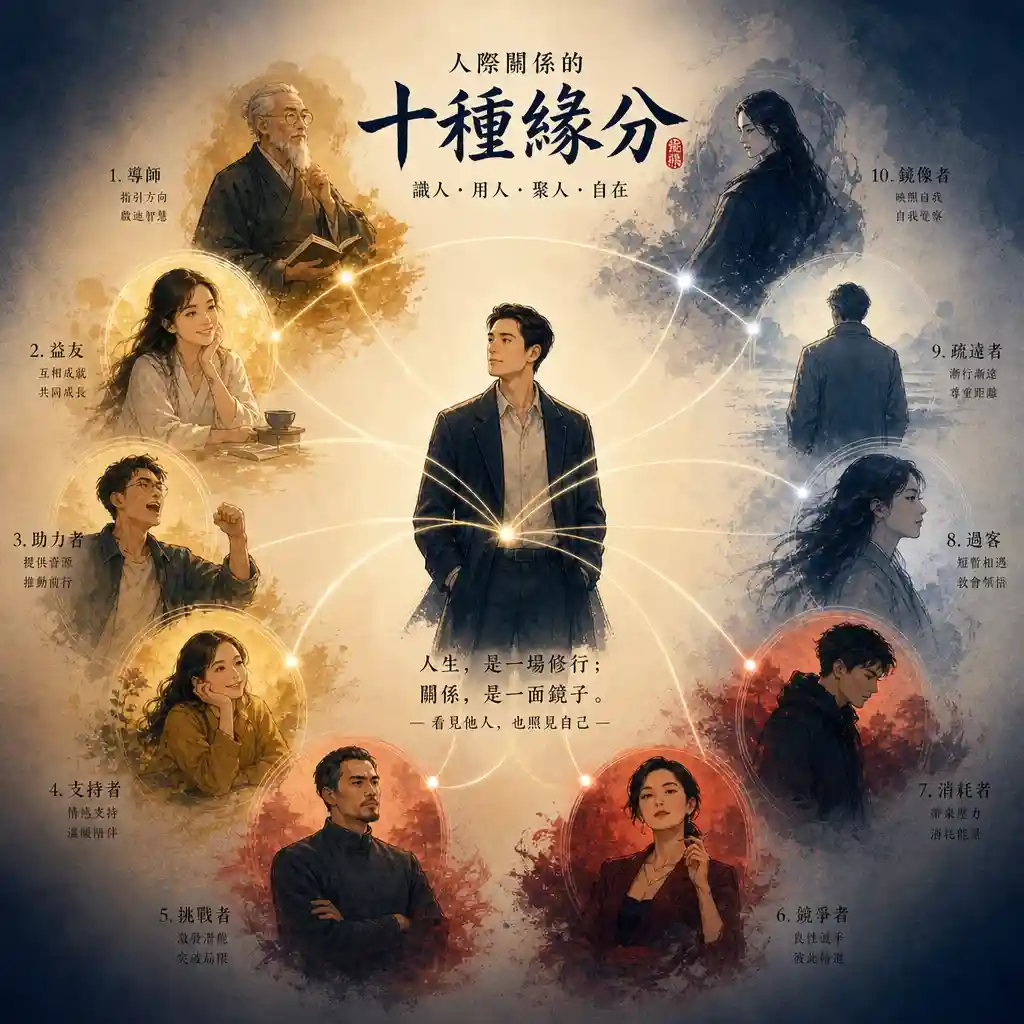
Have you ever noticed that some people energize you just by being around them — while others leave you feeling drained, even if they mean well?
In BaZi analysis, this isn't random. The ten archetypal patterns in your chart — called the Ten Gods (十神) — map directly onto how you form friendships, who you attract, and which relationships last.
If you've ever wondered why your social circle looks the way it does, or why certain types of people keep showing up in your life, your BaZi chart has an answer.


What Are the "Ten Gods" — And Why Do They Matter for Relationships?
The Ten Gods are not deities or spiritual beings. They're archetypal labels that describe the relationship between your Day Master (your core element) and the other elements in your chart.
Think of them as ten different "roles" that people play in your life — some energize you, some challenge you, some drain you. Understanding which roles dominate your chart helps you understand your social patterns before they play out.
1. The Peer Stars (比劫 — Bi Jie): Friends, Rivals, and Your Social Circle
The Peer Stars — Bi Jian (比肩) and Jie Cai (劫财) — represent people at your level: friends, classmates, colleagues, siblings, and your immediate social circle.
Bi Jian (比肩) — The True Ally
Bi Jian represents people who share your element — your mirrors, your equals, your ride-or-die friends.
"Those who share your energy seek the same things and resonate at the same frequency. The noble use friends for mutual growth; the petty use them for selfish gain." — San Ming Tong Hui (Ming Dynasty)
When Bi Jian is favorable in your chart: Your friends are genuine allies. They show up when you need them, share your values, and lift you up. You attract people who are dependable, loyal, and collaborative.
When Bi Jian is unfavorable: Friends can become competitors. Money disputes, borrowed favors that never get returned, and subtle betrayals from people you trusted are common patterns.
The practical takeaway: If your chart shows strong, favorable Bi Jian, lean into group activities, collaborations, and team-based work. Your social circle is a genuine asset.
Jie Cai (劫财) — The Social Connector
Jie Cai represents people in your wider circle — the acquaintances, the party friends, the networking connections. Charismatic, expansive, but with an undercurrent of competition.
When Jie Cai is favorable: You're a natural networker. You bring people together, integrate resources, and thrive in group settings. Partnership and collective ventures work well for you.
When Jie Cai is unfavorable: Socializing becomes expensive — literally and emotionally. Friends who borrow money, partnerships that sour, and people who use your generosity are recurring themes.
A real-world example: A client with strong unfavorable Jie Cai once told me, "I have a hundred contacts in my phone, but when I needed help moving, no one showed up." His chart predicted exactly this pattern — wide circle, shallow depth.
When Your Chart Has No Peer Stars
People with no Peer Stars in their chart tend to be naturally independent — sometimes to a fault. They don't rely on group support and prefer to handle things alone. It's not antisocial; it's self-reliant. But it means building a support network requires conscious effort.
2. The Mentor Stars (印星 — Yin Xing): Guides, Soulmates, and Those Who Protect You
The Mentor Stars — Zheng Yin (正印) and Pian Yin (偏印) — represent people who nurture, guide, and intellectually stimulate you. Teachers, mentors, older friends, and the rare soulmate who truly gets you.
Zheng Yin (正印) — The Steady Guide
Zheng Yin represents mentors who are grounded, reliable, and principled. Think of the professor who changed your career path, the older friend who gave you advice that still echoes years later, or the parent figure who always had your back.
When Zheng Yin is strong and clear: You attract mentors naturally. People who are genuinely invested in your growth appear at the right moments. Your social circle includes people who are wiser, more experienced, and generous with their knowledge.
Pian Yin (偏印) — The Unconventional Mentor
Pian Yin represents mentors who challenge your thinking, introduce you to niche communities, and expand your worldview in unexpected directions. They're less about comfort and more about transformation.
When Pian Yin is strong: Your closest friends are the ones who push you intellectually. You might have a small circle — but the people in it are deeply aligned with your values. Quality over quantity, always.
"When the Mentor Star is active, noble people elevate you and wise teachers appear at the right moment." — Yuan Hai Zi Ping (Song Dynasty)
When Mentor Stars Are Overwhelming
Too much Mentor Star energy creates a different problem: you become overly cautious, slow to trust, and emotionally guarded. You might have many acquaintances but struggle to let anyone in. The irony: the people who want to connect with you sense your walls and pull back.
When Your Chart Has No Mentor Stars
People with no Mentor Stars often feel like they're navigating life without a safety net. They don't have the "person who always knows what to say" in their corner. This doesn't mean they're unlucky — it means they've learned to be their own mentor. But it also means they need to consciously seek out guidance when facing big decisions.
3. The Expression Stars (食伤 — Shi Shang): Your Social Persona and First Impressions
The Expression Stars — Shi Shen (食神) and Shang Guan (伤官) — govern how you present yourself socially. They determine your first impression, your conversational style, and your reputation in social circles.
Shi Shen (食神) — The Warm Connector
Shi Shen represents warmth, humor, and emotional intelligence. People with strong Shi Shen are the ones who make everyone in the room feel comfortable. They listen well, speak kindly, and have a natural ability to put people at ease.
Socially: Shi Shen types attract friends effortlessly. Their circles are harmonious, long-lasting, and built on genuine affection. They're the friends who remember your birthday, who check in after a hard week, who make group dinners feel like therapy sessions (the good kind).
Shang Guan (伤官) — The Brilliant Truth-Teller
Shang Guan represents sharp intelligence, directness, and a tendency to speak your mind — even when it's uncomfortable. These people are fascinating, provocative, and sometimes polarizing.
Socially: Shang Guan types make friends quickly and lose them just as fast. Their circles are dynamic, intellectually stimulating, and occasionally dramatic. The people who stay are the ones who appreciate honesty over comfort.
"The Expression Star reveals talent through speech — sharp and unfiltered. People are drawn to your authenticity, and pushed away by your bluntness." — Classical BaZi commentary
When Expression Stars Dominate Without Mentor Support
This is a specific pattern: high Expression, low Mentor. The result is a social life that looks vibrant on the surface — lots of acquaintances, fun gatherings, constant activity — but lacks depth. When crisis hits, the crowd disappears. It's the "fair-weather friends" pattern that many people recognize but can't explain.
4. The Authority Stars (官杀 — Guan Sha): Social Pressure, Workplace Dynamics, and Hidden Rivals
The Authority Stars — Zheng Guan (正官) and Qi Sha (七杀) — represent structure, rules, and the people who hold power over you. In friendship terms, they map onto workplace relationships, social hierarchies, and the friends who challenge or control you.
Zheng Guan (正官) — The Principled Friend
Zheng Guan represents people who are principled, organized, and socially appropriate. They're the friends who remind you of your commitments, who hold you accountable, and who model integrity.
In your social circle: Zheng Guan types are the "responsible" friends. They're not the life of the party, but they're the ones you call when you need honest, grounded advice.
Qi Sha (七杀) — The Intense Challenger
Qi Sha represents people who are dominant, competitive, and sometimes controlling. They can be incredibly motivating — or incredibly draining.
When Qi Sha is overwhelming: You attract people who try to manage you, criticize you, or dominate conversations. Friendships feel like power struggles. You might find yourself constantly defending your choices or feeling like you're never "enough."
When Authority Stars Are Mixed
"Authority mixed" (官杀混杂) is a pattern where both Zheng Guan and Qi Sha appear prominently. The social consequence: a chaotic circle. You have principled friends and challenging friends in equal measure, and the tension between them creates instability. Long-term, steady friendships are harder to maintain.
5. The Wealth Stars (财星 — Cai Xing): Generosity, Reciprocity, and the Economics of Friendship
The Wealth Stars — Zheng Cai (正财) and Pian Cai (偏财) — represent how you give, receive, and manage resources in relationships. This includes money, yes, but also time, energy, and emotional labor.
Pian Cai (偏财) — The Generous Connector
Pian Cai represents generosity, open-handedness, and a willingness to invest in relationships. People with strong Pian Cai are the friends who pick up the tab, who lend without keeping score, who give gifts just because.
Socially: Pian Cai types have wide, warm circles. Their generosity attracts people, and their lack of calculation keeps friendships flowing naturally.
When Wealth Is Strong but the Day Master Is Weak
This is the "over-giver" pattern. You pour time, energy, and resources into friendships, but you don't receive proportionally. Over time, this creates resentment — even if you never voice it. People with this pattern often feel used, even by friends who love them.
When Wealth Dominates Without Mentor Support
This creates a transactional social style: relationships are evaluated for their utility. "What do I get from this person?" becomes the unconscious filter. The result is a circle that looks functional but lacks warmth. People sense the calculation and pull back emotionally, even if they stay connected superficially.
How to Read Your Own Chart
If this framework resonated with you — if you've recognized patterns in your friendships that you couldn't previously explain — the next step is straightforward. Get your free BaZi chart to see which Ten Gods dominate your profile. Then check your favorable element to understand whether those Gods work for you or against you.
The chart doesn't predict your future. But it does explain your patterns — and once you see the pattern, you can work with it.
Frequently Asked Questions
What does "Peer Stars overcoming Wealth" mean — and why are friends always connected to money?
"Peer Stars overcoming Wealth" (比劫夺财) is a classic BaZi pattern where Peer Stars (same-element energy) are strong relative to Wealth Stars. In practical terms, you tend to lose money through social situations — lending to friends, going in on partnerships that don't pan out, or being too generous for your own good. It doesn't mean your friends are bad people — it means your chart organizes social bonding through sharing, and sometimes that overshoots. If you have this pattern, the most practical fix is setting conscious financial boundaries.
Why do some friendships just fade away?
This often aligns with Luck Cycle transitions. Every decade, your chart's energetic emphasis shifts, which naturally changes the type of people you attract and resonate with. A friendship that felt deeply aligned under one Luck Pillar may feel distant under the next — not because of conflict, but because your growth trajectories are no longer parallel. It's not anyone's fault — it's the natural rhythm of your chart recalibrating.
Does having strong Mentor Stars make someone too dependent?
Not necessarily. Strong Mentor Stars mean you have no shortage of guidance, mentors, and protective figures in your life — but "dependence" and "leveraging resources wisely" are different things. The key is whether the Mentor Star is favorable or unfavorable in your chart. Favorable Mentor energy helps you naturally attract wise supporters and use resources efficiently. Unfavorable Mentor energy can make you indecisive, overly reliant on others' opinions, or paralyzed by too many options. The former is strategic; the latter is a trap.
Is it normal to have strong Expression Stars but hate socializing?
Completely normal. Expression Stars govern your ability to express yourself — not your desire to socialize. Someone with strong Shi Shen or Shang Guan might channel their expression through writing, art, or solo work rather than parties and small talk. They're not bad at socializing — they're wired for depth over breadth. If this is you, there's no need to force yourself to be outgoing. Your friendships will just look different: fewer people, deeper conversations.
How can I use BaZi to improve my existing friendships?
The most practical approach is identifying your "challenging Gods" — the patterns that cause you to lose energy — and consciously adjusting. If Jie Cai is unfavorable, practice pausing before lending money or making commitments. If Qi Sha is overwhelming, work on boundary-setting in relationships. If Wealth is weak and Mentor is also lacking, practice receiving help without guilt. BaZi isn't about changing your friends — it's about understanding your own blind spots in relationships.
Further Reading
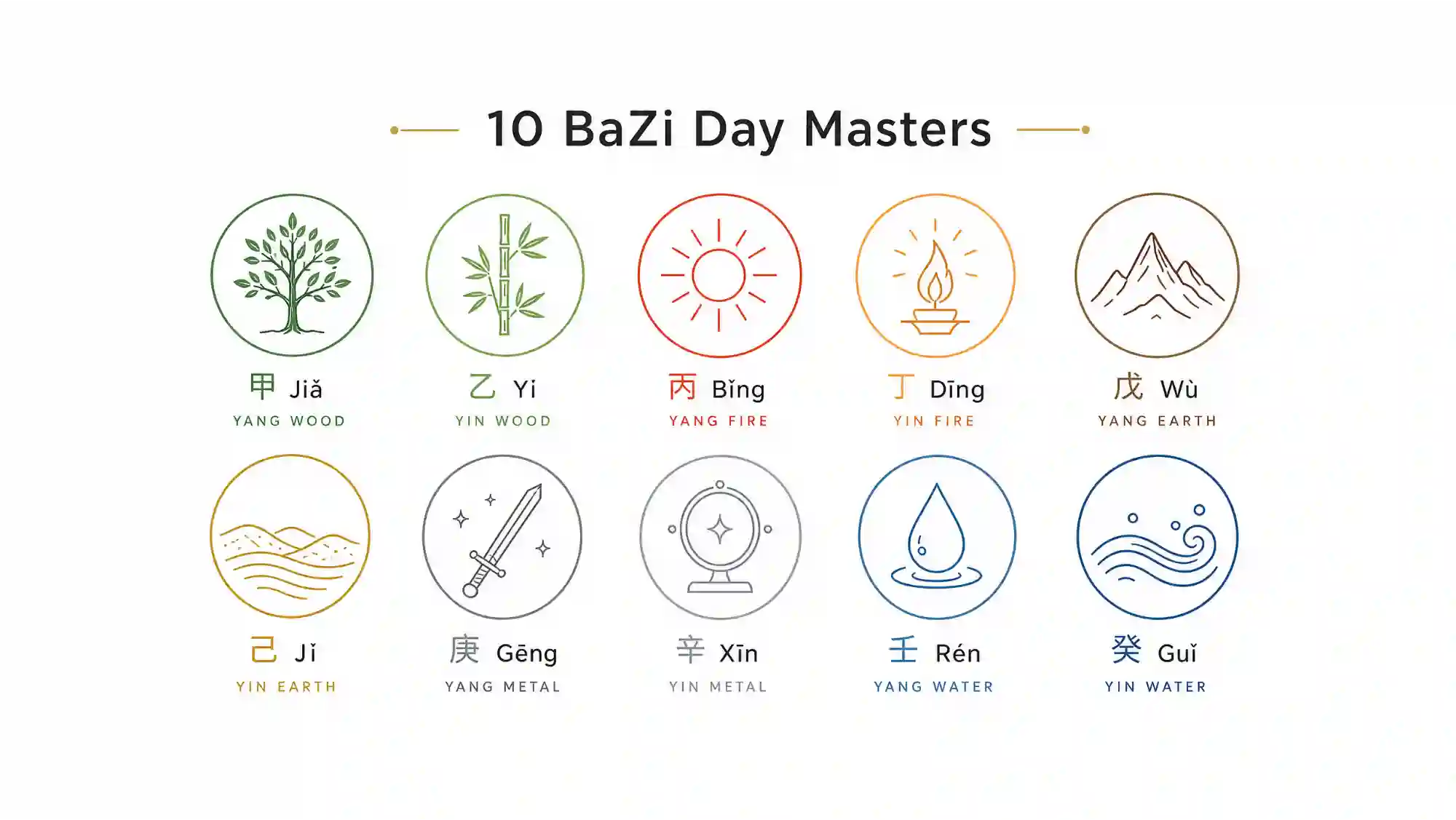
- 10 BaZi Day Masters as Modern Characters — which Day Master are you?
- Is a Weak Day Master Bad in BaZi? — why "weak" doesn't mean "unlucky"
- The Five Elements Theory: A Complete Guide to Wu Xing — understanding the generating and controlling cycles
Disclaimer: This article explores Chinese cultural traditions and BaZi analysis as a framework for self-reflection and archetype exploration. The Ten Gods are analytical categories within BaZi theory, not predictions of specific outcomes. All content is provided for educational and cultural understanding purposes only.
Frequently Asked Questions
Can BaZi tell me if someone is a toxic friend?
BaZi doesn't label people as 'toxic' — it reveals energetic dynamics. If your chart shows a Peer Star (比劫) in an unfavorable position, you may attract people who compete with you or drain your resources. But this is a pattern, not a prediction about any specific person. The value is awareness: once you recognize the dynamic, you can choose how to respond rather than repeating the cycle.
What if I have no Wealth Stars in my chart — does that mean I'll have no friends?
No. Having no Wealth Stars simply means relationships aren't primarily organized around resource exchange for you. Your friendships may be based more on shared values, intellectual connection, or emotional support. Every chart has a social signature — the absence of one element doesn't create a void, it shifts the emphasis elsewhere.
Can two people with incompatible Ten Gods still be friends?
Absolutely. Ten Gods describe tendencies, not rules. Two people whose dominant Gods might 'clash' on paper can have deep, lasting friendships — especially if their Luck Cycles are aligned during the period they meet. Compatibility frameworks are lenses, not verdicts. Many of the strongest friendships exist precisely because they challenge each other's patterns.
Do my Ten Gods change over time?
Your birth chart never changes — the Ten Gods in your natal chart are fixed. But your Luck Cycles (大运) overlay new elements every decade, which can strengthen or weaken specific Gods. Someone with weak Mentor Stars in their birth chart might enter a Luck Pillar dominated by Mentor energy and suddenly find mentors appearing. The pattern shifts, but the foundation stays.
Is this related to MBTI or personality typing?
There are interesting parallels — Peer Stars share traits with certain MBTI dimensions, Expression Stars map loosely onto extraversion, and Authority Stars relate to conscientiousness. But the frameworks operate differently: MBTI measures behavioral preferences, while Ten Gods describe elemental relationships in your chart. They can complement each other, but they're not interchangeable.