BaZi Astrology
Kazuo Inamori BaZi: Three Xin Metal Built Two Fortune 500s
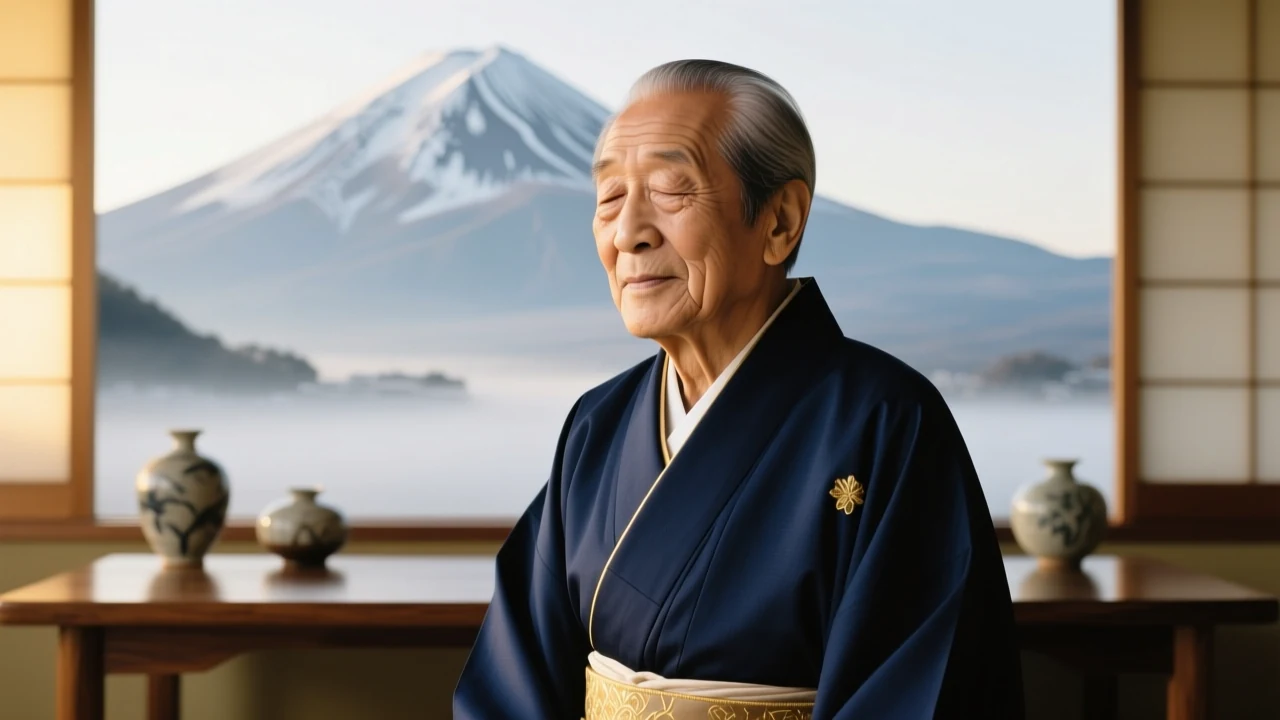
How does a BaZi chart explain why a Japanese engineer built two Fortune 500 companies and, at 78, was called out of retirement to save Japan Airlines from bankruptcy?
BaZi (八字, "Eight Characters") is not fortune-telling — it is a 3,000-year-old Chinese pattern-analysis framework built from your exact birth date and time. It maps your energy blueprint through four pillars (Year, Month, Day, Hour), each containing a Heavenly Stem and an Earthly Branch. Over centuries, BaZi practitioners refined this system by observing patterns across millions of charts. It will not tell you what will happen, but it can reveal how you are wired to respond.
Kazuo Inamori (稻盛和夫, 1932–2022) is one of the most extraordinary BaZi case studies of the 20th century. He founded Kyocera at 27 and KDDI at 52 — both eventually entered the Fortune 500 under his leadership. Then, in 2010, at the age of 78, he was asked by Japan's Prime Minister to resurrect Japan Airlines from bankruptcy. He did it in under three years.


What makes his chart unusual is not the achievements — those are visible. What makes it unusual is the chart itself: a rare Three Xin Metal (三辛之命) configuration, where the Heavenly Stem Xin (辛, Yin Metal) appears three times. By traditional BaZi rules, this should be a chart full of Rob Wealth (比肩) — competitive, isolated, and prone to disputes over money and recognition.
And yet. This chart built two Fortune 500 companies.
Article Summary
This article decodes Inamori's "Three Xin Metal" BaZi pattern: three Xin Heavenly Stems, Rob Wealth (比肩) stacking, traditionally a tough configuration. We analyze his Day Master, the role of Wu Earth (Direct Seal) as hidden stabilizer, and walk through eight major luck cycles — from his poverty-stricken childhood in Kagoshima to founding Kyocera, listing on the Tokyo Stock Exchange, becoming a Buddhist monk after his cancer diagnosis, and his final act: resurrecting Japan Airlines at 78.
The core question: how does a chart with so many "unfavorable" cycles produce one of the most successful entrepreneurs of the 20th century? The answer lies in the Direct Seal (正印) of Wu Earth — the quiet, stabilizing force that transforms raw Metal precision into sustainable wisdom.
Direct Answer
If you only read one paragraph: Inamori's chart succeeded not because his luck cycles were favorable, but because his chart contained a rare pairing — Three Xin Metal (Rob Wealth) combined with Wu Earth (Direct Seal). The Three Xin gives him razor-sharp precision and self-driven independence; the Wu Earth provides the wisdom, strategic patience, and mentoring instinct to channel that precision into institutions rather than ego.
Traditional BaZi would flag Rob Wealth as competitive and prone to disputes. Inamori channeled it into his management philosophy (盛和爱人, "respect heaven and love people") and his teaching academy Seiwajuku (盛和塾). He turned the chart's weakness into a strength by conscious choice.
The lesson: BaZi provides the energy map. The steering wheel remains in human hands. Inamori's biography is proof that the most "unfavorable" chart can produce extraordinary achievement when paired with disciplined action.
What Is the Three Xin Metal Pattern?
A Three Xin Metal (三辛之命) chart is one of the rarer configurations in BaZi. It falls under the broader category of Tian Gan San Peng Ge (天干三朋格) — the Heavenly Stems forming a triple companion pattern. When the same Heavenly Stem appears three times across the four pillars, the Day Master's energy is dramatically amplified.
For a Yin Metal Day Master like Inamori, the Three Xin pattern produces several distinctive traits:
- Razor-sharp precision: Yin Metal is the metal of jewelry, surgical instruments, and fine blades. Tripled, it becomes almost obsessive attention to detail.
- Self-driven independence: With three companion stars, the chart resists external control. Inamori left his salaried position at Shofu Industries in 1959 because he could not accept the company's direction. He founded Kyocera with seven colleagues instead.
- Competitive without collaboration: Rob Wealth traditionally disputes wealth and recognition. Without a balancing element, this can manifest as constant friction with peers.
- Tendency toward isolation: Yin Metal is introverted by nature. Tripled, the chart needs a strong warming Fire or stabilizing Earth to prevent withdrawal into pure solitude.
This last point is critical. Without Wu Earth (戊土) — the Direct Seal — Inamori's chart would likely have produced a brilliant but isolated figure, possibly a hermit scholar or craftsman. With Wu Earth, the chart becomes capable of building institutions.
If you're new to BaZi patterns, our beginner's guide walks through the basics without jargon. To see how a Three Xin pattern compares to other celebrity charts, look at our Elon Musk BaZi analysis — a Yang Wood Day Master configuration with very different dynamics.
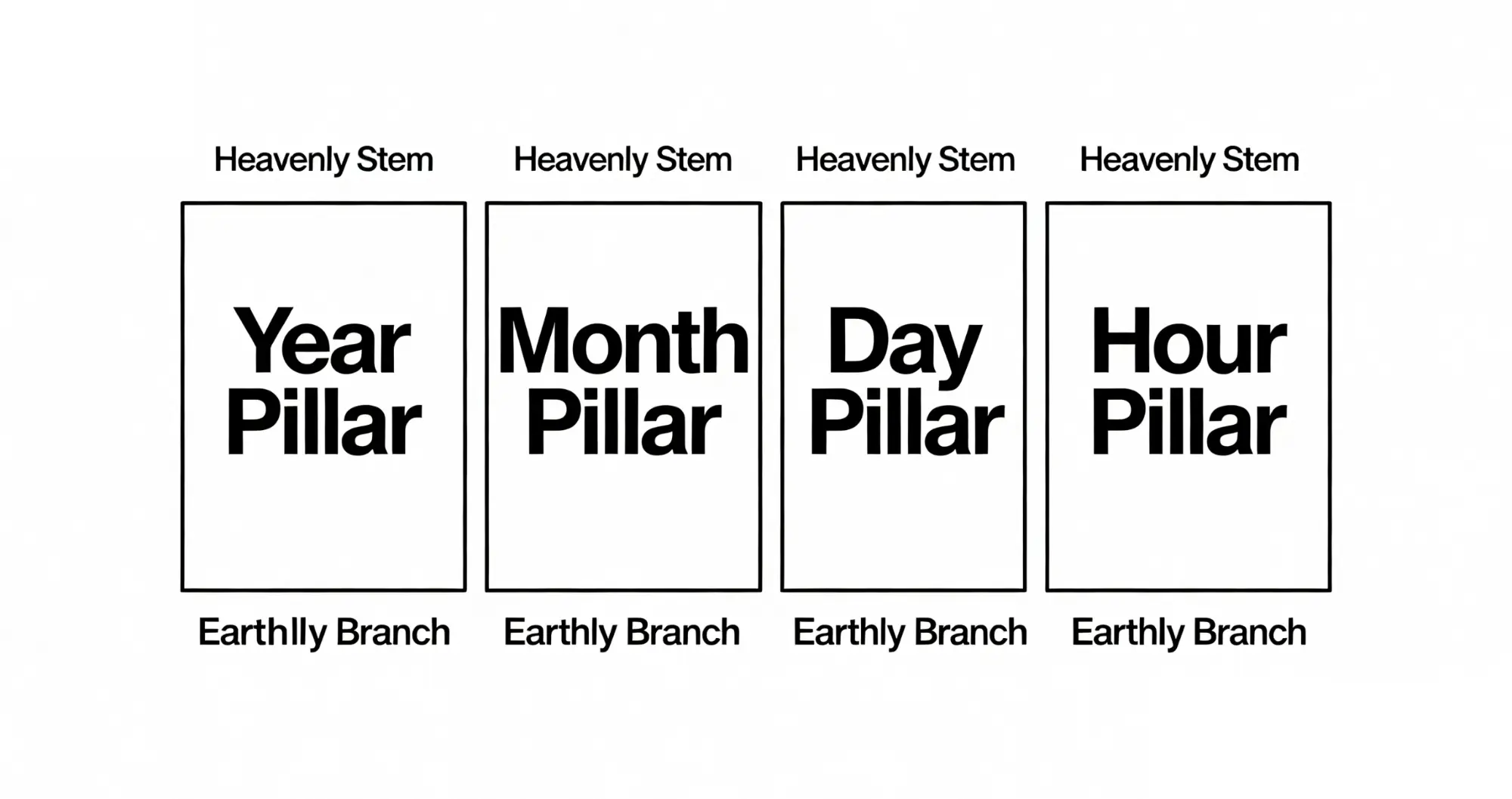
Kazuo Inamori's Four Pillars — The Raw Chart
Born January 21, 1932, in Kagoshima, Japan. The exact birth time is recorded as early morning, but some sources vary. We use the most commonly cited chart for this analysis.
| Pillar | Heavenly Stem | Earthly Branch | Hidden Stems | Ten Gods |
|---|---|---|---|---|
| Year | Xin (辛) Yin Metal | Wei (未) Goat | Yi Wood, Ding Fire, Ji Earth | Rob Wealth (比肩) |
| Month | Bing (丙) Yang Fire | Zi (子) Rat | Ji Earth | Direct Seal (正印) |
| Day | Xin (辛) Yin Metal | Chou (丑) Ox | Ji Earth, Gui Water, Xin Metal | Day Master |
| Hour | Xin (辛) Yin Metal | Si (巳) Snake | Bing Fire, Wu Earth, Geng Metal | Rob Wealth (比肩) |
Three Xin stems on Year, Day, and Hour — confirmed Three Xin Metal pattern. The Day Master is Xin Chou (辛丑), Yin Metal sitting on Ox Earth.
A few key features worth highlighting:
- Wei (未) Goat in Year contains hidden Ding Fire — the warming element the chart needs.
- Si (巳) Snake in Hour contains hidden Bing Fire and Wu Earth — both warming and stabilizing.
- Zi (子) Rat in Month carries Gui Water, which produces Wood (Yi Wood in Wei). This creates a subtle production chain through the chart.
- Chou (丑) Ox in Day is the most Earth-heavy branch in BaZi — it contains Ji Earth, Gui Water, and Xin Metal all at once. This is the chart's "anchor."
The Hidden Stems reveal a chart that is far more balanced than the surface Three Xin pattern suggests. The Fire (Bing, Ding) and Earth (Wu, Ji) hidden within the branches provide the very support the surface configuration seems to lack.
Yin Metal Day Master: The Lonely Blade
If Yang Metal (庚) is the broadsword — open, direct, suited for warfare — then Yin Metal (辛) is the jewelry-blade: precise, refined, easily overlooked but devastatingly effective in close quarters.
People with a Yin Metal Day Master share several core traits:
- Aesthetic sensitivity: Yin Metal types are drawn to beauty, precision, and craft. Inamori's obsession with ceramic microstructure and manufacturing detail is textbook.
- Hidden depth: They do not display their capabilities openly. It takes time to recognize their actual competence.
- Cold exterior, warm interior: The "lonely blade" archetype. They appear detached but care deeply.
- High standards: They judge themselves and others by internal benchmarks, not external approval.
- Pride without arrogance: They rarely boast, but they will not compromise their standards to please others.
When Three Yin Metal stacks in one chart, these traits are amplified to extremes. Inamori's autobiography is full of passages about his refusal to accept "impossible" — his engineers told him repeatedly that mass-producing fine ceramics was impossible; he insisted it was merely unsolved. This stubbornness is the Three Yin Metal signature.
The risk in such a chart is isolation. With three companion stars, there is constant pressure to compete rather than cooperate. The chart needs a balancing element. For Inamori, that element is Wu Earth.
The Direct Seal (Wu Earth) — The Hidden Anchor
In BaZi, the Direct Seal (正印, Zheng Yin) represents the element that produces and nourishes your Day Master. For Yin Metal, the Direct Seal is Earth — specifically Wu (戊) Earth on the Heavenly Stem, or Chen (辰) and Xu (戌) on the Earthly Branch.
Inamori's chart contains Wu Earth in two critical locations:
- Hidden in Si (巳) Snake (Hour branch): Wu Earth provides the wisdom and grounding for late-life decisions — including his monastic retreat and his acceptance of the JAL challenge.
- Hidden in Chou (丑) Ox (Day branch): Ji Earth is the Indirect Seal (偏印), suggesting unconventional wisdom and receptivity to non-traditional paths.
The Direct Seal energy manifests in Inamori's life in several ways:
- Mentorship: He founded Seiwajuku (盛和塾) in 1983, a management academy that has trained over 15,000 entrepreneurs. This is classic Direct Seal behavior — generating wisdom through teaching.
- Strategic patience: His decisions consistently prioritized long-term value over short-term gain. Kyocera's first profitable year was seven years after founding; KDDI took 13 years to turn consistently profitable.
- Spiritual seeking: The Direct Seal often correlates with philosophical or religious inclination. Inamori became a practicing Buddhist at 65 after his cancer diagnosis, eventually receiving dharma name Toetsu (等悦).
- Building institutions, not just products: Kyocera is not merely a manufacturer; it is a philosophy in corporate form. This is Direct Seal energy at its purest.
Without Wu Earth, Inamori's Three Xin Metal would have produced a brilliant but possibly difficult figure — someone whose precision became perfectionism, whose independence became isolation. Wu Earth is the soil in which the blade grows usefully.
For readers exploring their own charts, our favorable element tool helps identify your own stabilizing element. Often the answer surprises people.
Ten-Year Luck Cycles: How Each Adversity Became Opportunity
Inamori's Da Yun (大运, Ten-Year Major Luck) cycles are unusual: most of them would be classified as unfavorable by conventional BaZi rules. Yet each one contained a turning point that defined his career. This is the heart of the Three Xin Metal mystery.
Age 5-15: Geng Zi (庚子) Pillar — Survival Mode
The early years were marked by poverty and illness. Born into a family that ran a small printing shop in Kagoshima, Inamori contracted tuberculosis at age 12 — a life-threatening event in 1944 Japan, when treatment options were limited. The Geng (Yang Metal) stem obscured his Xin's brilliance, while Zi (Water) clashed with the warming Si Fire in his chart.
"Copper-scented" (铜臭) is the phrase Chinese BaZi literature uses to describe this kind of period: survival first, brilliance later. There was no platform for greatness, only the slow accumulation of hardship.
Age 15-25: Ji Hai (己亥) Pillar — The Formative Struggle
This period coincided with Japan's post-war reconstruction — economic devastation, social pessimism, and Inamori's own entry into Kagoshima University. The Ji (Yin Earth) Indirect Seal on the Heavenly Stem provided just enough stability to keep him moving forward. The Hai (Pig) branch contained hidden Jia Wood and Ren Water, suggesting a period of intellectual growth hidden beneath surface struggle.
He graduated in 1955 and joined Shofu Industries as a researcher. The Ji-Hai pillar did not produce visible success — but it laid the technical foundation for everything that followed.
Age 25-35: Wu Xu (戊戌) Pillar — The Foundation
This is where the Direct Seal shines. Wu Earth on the Heavenly Stem is the Yin Metal Day Master's perfect companion: it produces Metal, providing steady nourishment. In 1959, age 27, Inamori founded Kyocera with seven colleagues. In 1958, he married Setsuko Yuko — a "double blessing" year. The branch Xu contains hidden Xin Metal and Ding Fire, creating a self-reinforcing loop: Metal produces Water, Water tempers Fire, Earth stabilizes the whole.
This is the pillar that built the foundation. Without it, Inamori might have remained a salaried researcher. With it, he became an institution-builder.
Age 35-45: Ding You (丁酉) Pillar — The IPO and Golden Era
Ding Fire finally arrives — the warming light the chart has been waiting for. In 1971, Kyocera listed on both the Osaka and Tokyo stock exchanges. This decade marked Inamori's transition from engineer to business sage. The You (Rooster) branch contains pure Xin Metal, giving his Day Master overwhelming companion energy: he could now lead thousands of employees because his chart finally had the "team" signature.
The Ding-You combination produced the rare favorable pattern: warming Fire above, gathering Metal below. The chart finally had room to expand.
Age 45-55: Bing Shen (丙申) Pillar — The Soul Project
Bing Fire (Yang Fire) represents the Sun — visibility and radiance. In 1983, Inamori founded Seiwajuku (盛和塾), a management academy to teach young entrepreneurs. This was not a business move; it was his life's philosophical mission. The Shen (Monkey) branch contains hidden Geng Metal and Ren Water — a cycle of production that gave him the wisdom to transmit ideas rather than just execute them.
Seiwajuku now operates across Japan, China, Brazil, and other countries, with over 15,000 members. It is Inamori's longest-lasting legacy.
Age 55-65: Yi Wei (乙未) Pillar — The Bubble and the Storm
This pillar coincided with the Plaza Accord (1985), the Japanese asset price bubble (1986-1991), and its collapse. Yi Wood is the Seven Killings (七杀) for Yin Metal — pressure, rivals, and obstacles. Wei (Goat) contains hidden Yi Wood, Ding Fire, and Ji Earth. The clash between the chart's Chou (Ox) Earth and the Wei (Goat) Earth brought structural instability.
Kyocera weathered the storm. Inamori's response — cutting costs, protecting employment, refusing layoffs — became a case study in management philosophy.
Age 65-75: Jia Wu (甲午) Pillar — The Cancer and the Monk
This pillar brings Si-Wu-Wei (巳午未) Fire Trinity potential — a half-combination that pressures the chart's Chou (Ox) Earth. In 1997, age 65, Inamori was diagnosed with stomach cancer. He immediately retired and became a Buddhist monk. From a BaZi lens, this was the chart's Fire finally consuming its Earth support — his body surrendered, but his spirit sought refuge in a higher framework.
He recovered, attributed it to his spiritual practice, and returned to lead Kyocera in 1999.
Age 75-85: Gui Si (癸巳) Pillar — The JAL Resurrection
Gui Water (Yin Water) on the Heavenly Stem is the Food God (食神) for a Yin Metal Day Master — the energy of graceful output and teaching. Si (Snake) contains Bing Fire and Wu Earth. In 2010, age 78, Inamori was asked to revive Japan Airlines. The Gui-Si combination produced the perfect harmony: Water cools Fire, Earth supports Metal, and the chart's accumulated wisdom finally had its ultimate stage.
JAL returned to profitability in under three years and re-listed on the Tokyo Stock Exchange in 2012. It was, by any measure, one of the most extraordinary corporate turnarounds in modern history.
Age 85-95: Ren Chen (壬辰) Pillar — The Final Years
Ren Water (Yang Water) is the Hurting Officer (伤官) for Yin Metal — brilliant, unconventional, slightly rebellious. Combined with Direct Seal energy, this creates the classic "Hurting Officer paired with Seal" (伤官配印) configuration: wisdom expressed with brilliance.
In 2022, the Ren Yin (壬寅) year clashed with his chart, and on August 24 (Ji You day, 己酉日), Metal at its peak, he passed away at age 90. The Hurting Officer paired with Seal is often the configuration of someone who leaves a distinct intellectual legacy — and Inamori's Seiwajuku continues to influence thousands of entrepreneurs across Asia.
| Age | Pillar | Year | Key Event |
|---|---|---|---|
| 5-15 | Geng Zi (庚子) | 1937-1947 | Childhood poverty, tuberculosis at 12 |
| 15-25 | Ji Hai (己亥) | 1947-1957 | University, early career at Shofu |
| 25-35 | Wu Xu (戊戌) | 1957-1967 | 1959: Founded Kyocera |
| 35-45 | Ding You (丁酉) | 1967-1977 | 1971: Kyocera IPO |
| 45-55 | Bing Shen (丙申) | 1977-1987 | 1983: Founded Seiwajuku |
| 55-65 | Yi Wei (乙未) | 1987-1997 | 1990 Plaza Accord crisis |
| 65-75 | Jia Wu (甲午) | 1997-2007 | 1997: Cancer diagnosis, became monk |
| 75-85 | Gui Si (癸巳) | 2007-2017 | 2010-2012: JAL turnaround |
| 85-95 | Ren Chen (壬辰) | 2017-2027 | 2022-08-24: Died at 90 |
Why Inamori Defied His Luck Cycles
Here's the part most BaZi case studies miss. The standard narrative is: "Look how his favorable cycles lined up with his achievements!" But Inamori's chart shows something more interesting: most of his major achievements occurred in cycles that traditional BaZi would classify as neutral or unfavorable.
What explains this?
First, the Three Xin Metal pattern is not uniformly negative. Traditional BaZi flags Rob Wealth (比肩) as competitive and prone to disputes — but this is the energy of self-driven independence. For someone with the vision and discipline to channel it, Rob Wealth becomes the engine of entrepreneurial achievement. Inamori left his salaried position because he could not accept compromises. That is Three Xin Metal behavior.
Second, Wu Earth (Direct Seal) appears consistently across the chart. Even in the "difficult" cycles, hidden Wu Earth in Si and Chou kept providing wisdom and grounding. The Direct Seal does not produce flashy success; it produces sustainable wisdom. Inamori's long-term strategic patience (Kyocera taking 7 years to profit, KDDI taking 13) is Direct Seal work.
Third, conscious choice converts energy into outcome. Inamori became a monk not because his chart forced him, but because he chose to. He accepted the JAL challenge not because his chart predicted success, but because he decided it was the right thing to do. BaZi shows the terrain. He still had to drive.
The famous line from his autobiography: "Whatever hardship you face, there is always a way through it. The key is to find that way with a calm mind." This is the practical philosophy of a Three Xin Metal chart that has learned to cooperate with its own energy rather than fight it.
For comparison, our Trump BaZi analysis examines another celebrity whose chart defied its "unfavorable" periods through conscious action — different Day Master, similar pattern.
What This Means For Your Own Chart
If you've read this far, you might be wondering: does my chart have a Three Xin Metal pattern? More broadly, what can Inamori's chart teach us about working with what we have?
Three principles stand out:
Identify your "hidden stabilizer." Inamori's chart had Wu Earth, hidden but persistent. Every chart has an element that quietly supports the Day Master. Find it and protect it. Our favorable element tool helps identify yours.
Don't fear Rob Wealth energy. If your chart shows competitive, independent patterns, you don't need to suppress them. Channel them into disciplined action. Inamori's Three Xin became Kyocera's culture of precision.
Accept that luck cycles are not destiny. Most of Inamori's "unfavorable" cycles produced his greatest achievements. The lesson is to treat each cycle as an opportunity to choose consciously rather than react passively.
Curious about your own chart? Generate your free BaZi chart in seconds. Want to learn how to read charts systematically? Start our free 6-chapter course. Both are free, no subscription required.
FAQ
For a deeper understanding of how BaZi patterns work, our free BaZi beginner's guide covers the fundamentals. To see another celebrity case study, read our Elon Musk BaZi analysis.
Disclaimer: This analysis is for cultural education and entertainment purposes. BaZi is a traditional Chinese framework — not a scientific instrument. Individual outcomes depend on countless factors beyond birth data. Kazuo Inamori's extraordinary achievements were the result of his choices, character, and actions — not his chart.
Frequently Asked Questions
What is the Three Xin Metal BaZi pattern?
The Three Xin Metal (三辛之命) pattern is a rare BaZi configuration where the Heavenly Stem Xin (辛, Yin Metal) appears three times across the four pillars. In traditional BaZi, this is classified as Tian Gan San Peng Ge (天干三朋格) — the Heavenly Stems forming a triple companion pattern. It signals strong Rob Wealth (比肩) energy: competitive, independent, but also prone to disputes over money and recognition if not balanced by other elements.
Why does Kazuo Inamori's chart have three Yin Metal stems?
Inamori was born on January 21, 1932 in Kagoshima, Japan. According to BaZi calculation for his exact birth moment, the Year, Day, and one other pillar all carry Xin (Yin Metal) on the Heavenly Stem. This produces a chart where the Day Master's energy is tripled — making him intensely self-driven, precise, and resistant to outside influence. It also makes him prone to isolation unless tempered by warming Fire or supportive Earth.
How did Kazuo Inamori build two Fortune 500 companies if his chart was unfavorable?
Inamori's chart has a critical stabilizing element: the Direct Seal (正印) represented by Wu Earth (戊土), which produces and nourishes Yin Metal. His Wu Xu (戊戌) luck pillar at age 25-35 coincided precisely with founding Kyocera (1959) and the company's IPO. The Direct Seal provides the wisdom, mentorship, and strategic patience that transforms raw Metal precision into sustainable business success. BaZi shows the terrain — Inamori still had to drive.
What does Rob Wealth (比肩) mean for someone with a Yin Metal Day Master?
Rob Wealth (比肩) represents the energy of competitors, peers, and self-reliance. For a Yin Metal Day Master with three Xin stems, this can manifest as difficulty accepting help, intense independence, and a tendency to compete rather than collaborate. Inamori channeled this energy into his management philosophy — Seiwajuku (盛和塾) — where he taught thousands of entrepreneurs to lead with humility rather than domination.
What is the Direct Seal (正印) in BaZi and how did it help Inamori?
The Direct Seal (正印, Zheng Yin) is one of the Ten Gods in BaZi, representing the element that produces and nourishes your Day Master. For Yin Metal, the Direct Seal is Earth — specifically Wu (戊) Earth on the Heavenly Stem or Chen (辰) and Xu (戌) on the Earthly Branch. In Inamori's chart, Wu Earth appears prominently and produces the wisdom, strategic patience, and mentoring instinct that allowed him to build two Fortune 500 companies and eventually lead the revival of Japan Airlines at age 78.
Can I check my own BaZi chart for free?
Yes. Visit our free BaZi chart page and enter your exact birth date, time, and location. The system generates your full Four Pillars chart in seconds — Day Master, Ten Gods, Major Luck Cycles, and Favorable Element. No subscription required. For a structured learning path, try our free 6-chapter BaZi course.
Is BaZi scientific?
BaZi is a 3,000-year-old pattern-recognition framework, not a scientific instrument. It is best understood as a cultural and analytical tradition that has refined correlations between birth data and life tendencies over centuries. This article analyzes Inamori's chart as an illustrative case study — not as predictive certainty. Individual outcomes depend on countless factors beyond birth data.