BaZi Astrology
Elon Musk BaZi Chart: Four Pillars of Destiny Decoded

How does a BaZi chart explain Elon Musk's rise from near-bankruptcy to the world's richest person? We break down his Yang Wood Day Master and Five Phases.
BaZi (八字) is not fortune-telling — it's a pattern analysis system built from your birth date and time. In Musk's case, his Yang Wood Day Master paired with the Seven Killings Star maps closely onto traits we can observe: extreme risk tolerance, relentless drive, and a tendency to perform under crushing pressure.
Over 1,000 years of development in China, BaZi practitioners have refined this framework by observing patterns across millions of charts. It won't tell you what will happen — but it can reveal how you're wired to respond.


What Is a BaZi Chart, Exactly?
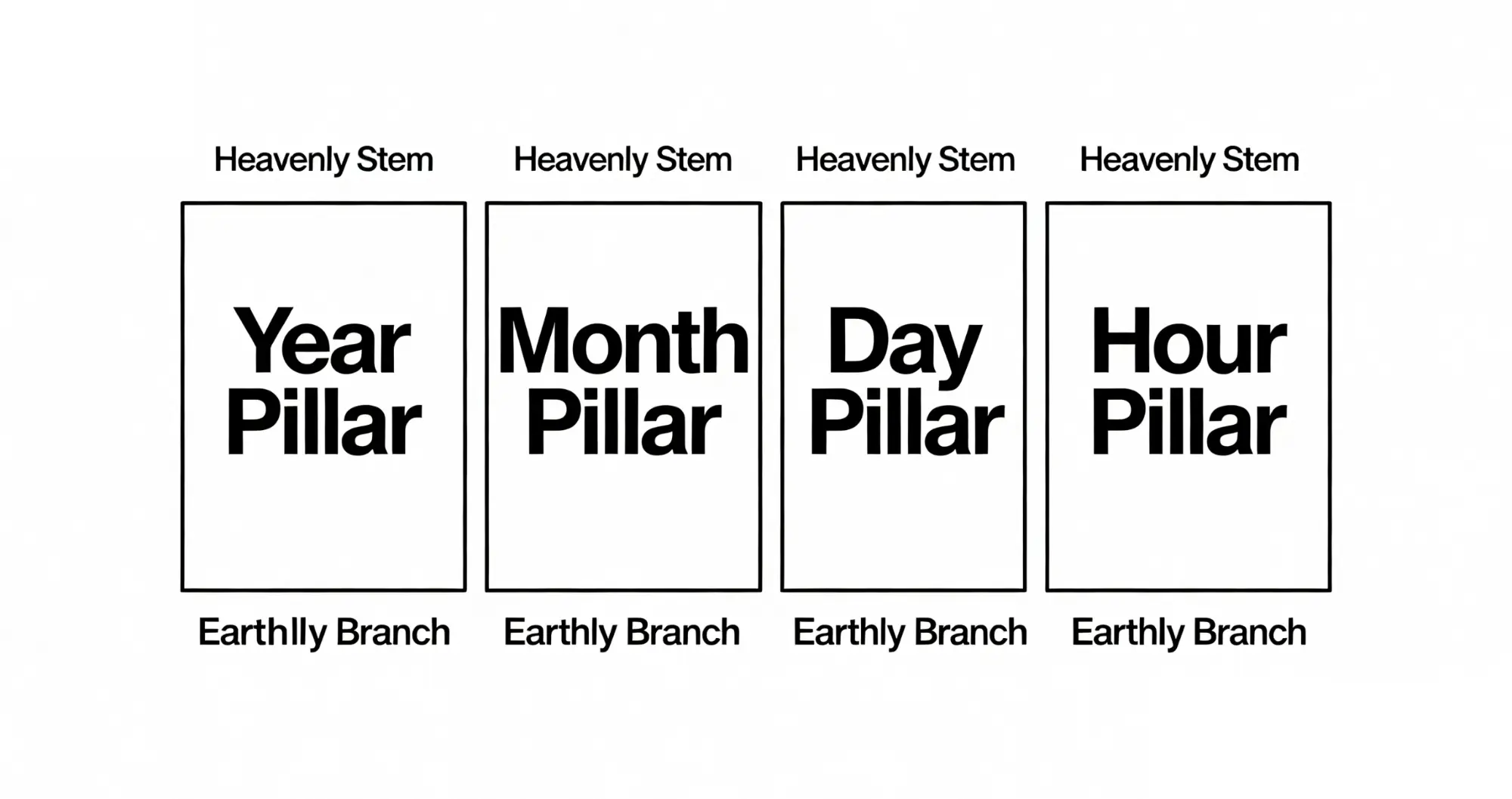
A BaZi (八字, "Eight Characters") chart, also called the Four Pillars of Destiny, maps the energy composition of your exact birth moment. It uses four columns — Year, Month, Day, and Hour — each containing a Heavenly Stem (Tiān Gān) and an Earthly Branch (Dì Zhī). That's eight characters total.
Think of it as an energy blueprint. Not a fixed script, but more like your personality's "factory settings" — the tendencies you were born with, the patterns that tend to show up under pressure.
The most important piece is the Day Master — the Heavenly Stem of the Day Pillar. In Western terms, it's roughly your core identity. Not your Sun sign (that's Western astrology, a completely different system), but more like the dominant "frequency" that colors how you process the world.
If you're completely new to this system, our free BaZi guide walks through the basics without any jargon. Want to go deeper? Start the free 6-chapter course.
The Five Phases (Wu Xing)
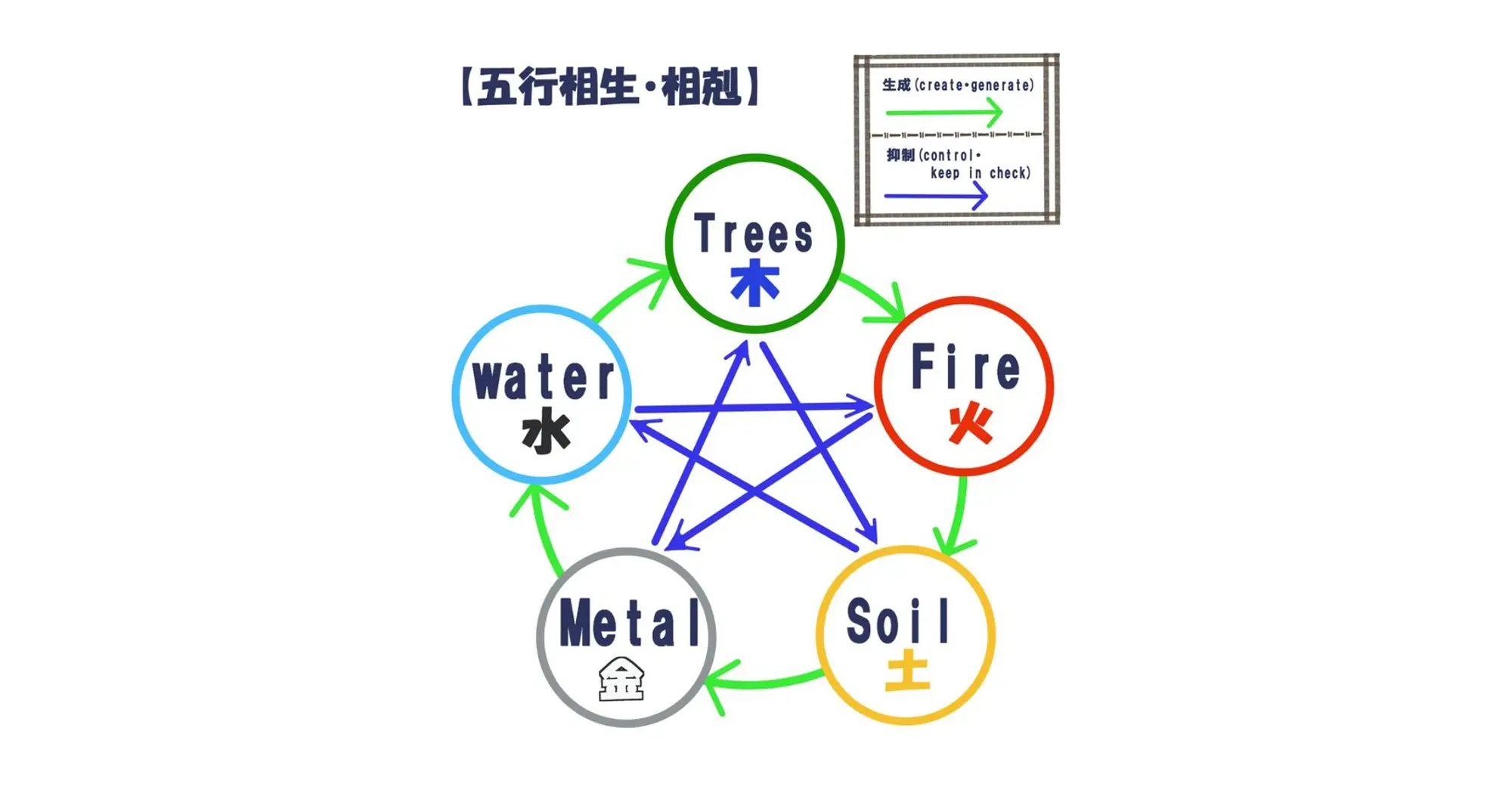
Before we dig into Musk's chart, here's a quick reference for the Five Phases that BaZi uses:
| Phase | Symbol | Energy Type |
|---|---|---|
| Wood | 木 | Growth, expansion, upward drive |
| Fire | 火 | Expression, transformation, visibility |
| Earth | 土 | Stability, grounding, transition |
| Metal | 金 | Precision, discipline, contraction |
| Water | 水 | Flow, adaptability, depth |
These aren't static "elements" like the Greek four — they're phases that interact dynamically. Wood feeds Fire, Fire creates Earth, and so on. It's closer to ecology than chemistry.
Elon Musk's Four Pillars — The Raw Chart
Born June 28, 1971, at 07:30 in Pretoria, South Africa (True Solar Time: 07:19).
| Pillar | Heavenly Stem | Earthly Branch | Hidden Stems |
|---|---|---|---|
| Year | Xin (辛) Yin Metal | Hai (亥) Pig | Ren Water, Jia Wood |
| Month | Jia (甲) Yang Wood | Wu (午) Horse | Ding Fire, Ji Earth |
| Day | Jia (甲) Yang Wood | Xu (戌) Dog | Wu Earth, Xin Metal, Ding Fire |
| Hour | Chen (辰) Dragon — unconfirmed | Xu (戌) Dog | Wu Earth, Yi Wood, Gui Water |
The Day Master is Jia (甲) — Yang Wood. This is Musk's core energy signature.
Decoding the Yang Wood Day Master
Jia Wood represents a tall, upright tree. Not a flower, not a vine — a full-grown tree that refuses to bend.
People with Yang Wood Day Master tend to share certain traits:
- Stubborn persistence — they set a direction and keep going, often long after others would quit
- Direct communication — not much subtlety, not much patience for office politics
- Growth-oriented — always expanding, always building, rarely satisfied with the status quo
- Resilience — pressure makes them stronger, which explains why some Jia Wood people seem to thrive in chaos
Sound like anyone you know?
Musk's Jia Wood sits in the Day Pillar alongside Xu (戌) Dog, which contains hidden Wu Earth (stability) and Xin Metal (discipline). This gives his Wood some grounding — without it, pure Jia Wood can be untamed. The Dog branch adds a layer of pragmatic stubbornness.
His Month Pillar also carries Jia Wood (甲), which means the Wood energy is seasonally supported — born in the Wu (午) Horse month of early summer, when Wood energy is transitioning. This is called "not quite in season" in BaZi terms, which partly explains why Musk's path wasn't straightforward. He had to fight for every inch.
Seven Killings Star — The Engine Behind the Rockets
Here's where it gets interesting. The Seven Killings Star (七杀, Qī Shā) is one of the most powerful — and most misunderstood — configurations in BaZi.
In simple terms, Seven Killings represents extreme pressure, authority, and life-or-death stakes. It's the energy of the warrior who fights best when cornered.
Musk has it in spades. His Year Pillar carries Xin (辛) Metal, which directly "attacks" his Jia Wood Day Master (Metal chops Wood in the Five Phases cycle). That's textbook Seven Killings.
What does this look like in practice?
- 2008: Tesla nearly bankrupt, SpaceX's third rocket launch failed. Most people would walk away. Seven Killings energy doesn't let you walk away — it forces you to double down.
- 2018: The "funding secured" tweet, production hell at Tesla. Self-sabotaging but also self-rescuing — classic Seven Killings pattern of creating crises and then resolving them.
- 2022: Twitter acquisition. Nobody thought it was rational. Seven Killings people don't care about rational — they care about the challenge.
The key insight: Seven Killings isn't "good" or "bad." It's a high-octane fuel. It produces extraordinary results under pressure, but it also burns through relationships, money, and reputations. The fact that Musk is still standing after decades of this pattern is partly due to the support structures in his chart — which we'll look at next.
The Supporting Cast — Resource and Companion Stars
A BaZi chart isn't just about the Day Master and one dominant star. The interplay between all elements creates the full picture.
Resource Star (Yin Water from Hai Pig): Musk's Year Branch contains Ren Water, which feeds his Jia Wood. In BaZi, Water producing Wood represents knowledge, intuition, and the ability to think in systems. This is the "engineer's mind" — the capacity to hold complex technical problems in your head and solve them.
Companion Star (Jia Wood in Month Pillar): Having the same Day Master appear in the Month Pillar means Musk has strong "peer energy" — the drive to compete, to measure himself against others, and to surround himself with ambitious people. It's no coincidence that he's built companies by attracting top-tier talent and then pushing them to their limits.
Wealth Star (Wu Earth): Earth is the element that Wood controls (roots anchor into Earth). In BaZi, your "wealth element" is the one your Day Master dominates. Musk has Wu Earth in both his Day Branch and Hour Branch, which suggests multiple streams of wealth and a hands-on approach to money — not passive investing, but building things that generate value.
The balance here matters. Too much Seven Killings without Resource support creates a person who self-destructs. Too much Companion Star without direction creates someone who competes without purpose. Musk's chart has just enough of each to create a sustained pattern of high-risk, high-reward behavior.
Ten-Year Luck Cycles — Timing Is Everything
BaZi doesn't just look at your birth chart — it also analyzes Da Yun (大运, "Major Luck"), which are 10-year periods that overlay on your natal chart and shift the energy dynamics.
While the exact calculation requires precise birth time (Musk's hour is debated — some sources say Chen Dragon, others say Xu Dog), here are the general patterns:
| Age Range | Likely Luck Pillar | Key Theme |
|---|---|---|
| 20-30 | Yin Water / Hai Pig | Learning, gathering resources, building foundations |
| 30-40 | Xin Metal / You Rooster | Seven Killings peak — maximum pressure, maximum output (PayPal sale, SpaceX/Tesla founding) |
| 40-50 | Wu Earth / Xu Dog | Wealth expansion phase (Tesla Model 3 success, SpaceX contracts) |
| 50-60 | Ji Earth / Wei Goat | Continued wealth but with more stability (Twitter, xAI) |
The 30-40 period is particularly telling. Metal controlling Wood at peak intensity aligns almost perfectly with Musk's most turbulent and productive decade. The pressure was enormous — but so was the output.
Why This Matters (For You)
Here's the thing most celebrity BaZi analyses miss: the point isn't to gawk at famous people's charts. The point is to understand how BaZi works by using someone whose life we can all observe.
If you're curious about your own energy patterns — your Day Master, your dominant stars, your luck cycles — you can check your free BaZi chart and see what the system reveals about your wiring. Ready to learn how to read charts yourself? Start our free 6-chapter course.
No subscription required. No upsell. Just your Four Pillars, decoded.
More Celebrity BaZi Decoded
Want to compare Musk's chart with other public figures? See how Japan's Kazuo Inamori built two Fortune 500 companies from a rare Three Xin Metal pattern — a configuration almost no traditional BaZi textbook would call favorable. Read the full Inamori analysis.
For a chart that looks nothing like Musk's — pure Fire-Earth with almost no Water — see Trump's BaZi decoded: how the same element (moist Earth) appeared at both presidential victories.
Disclaimer: This analysis is for cultural education and entertainment purposes. BaZi is a traditional Chinese framework — not a scientific instrument. Individual outcomes depend on countless factors beyond birth data.
Frequently Asked Questions
Is BaZi the same as Chinese Zodiac?
No. Chinese Zodiac assigns one of twelve animals based on your birth year, while BaZi uses your exact birth date and time (Four Pillars with 10 Heavenly Stems and 12 Earthly Branches). BaZi is far more detailed and personalized.
Can BaZi predict someone's success?
BaZi reveals energy patterns and tendencies, not specific outcomes. Many successful people share certain configurations, but environment, choices, and timing all matter equally.
What does Yang Wood mean in a BaZi chart?
Yang Wood (Jia / 甲) represents the energy of a large, upright tree — growth, upward momentum, and resistance to being cut down. As a Day Master, it colors your core approach to life with persistence and ambition.
Why does Musk's chart have all Five Phases?
Having all Five Phases present is relatively balanced in BaZi theory, suggesting versatility across domains like tech, finance, and aerospace. Charts missing phases tend to show more extreme strengths and weaknesses.
What is the Seven Killings Star in BaZi?
The Seven Killings Star (七杀, Qi Sha) represents extreme pressure, authority, and life-or-death stakes. It produces extraordinary results under pressure but can also burn through relationships and resources if unbalanced.
What is Elon Musk's Chinese zodiac?
Born on June 28, 1971, Elon Musk's Chinese zodiac is the Metal Pig (辛亥). The Pig is his Earthly Branch, while Metal is the Heavenly Stem of his birth year — a water-rich sign associated with depth, adaptability, and quiet ambition.
How accurate is Elon Musk's birth time for BaZi?
Musk's birth date (June 28, 1971) and location (Pretoria, South Africa) are well-documented, but the exact minute of birth remains debated. BaZi requires precise birth time to determine the Hour Pillar, which represents your inner world and life direction. Our analysis uses 07:30 as the commonly cited time.