Home Feng Shui
Door Facing Door Feng Shui: 4 Fixes for Bad Energy Between Neighbors
In traditional feng shui — the ancient Chinese practice of arranging your space to support wellbeing — the front door is called the energy gateway of your home. It's where good fortune, positive energy, and opportunity enter. In modern terms, think of it as your home's "first impression" zone: the space that sets the tone for everything that follows.
Modern apartment living makes one layout extremely common: two front doors directly facing each other across a shared hallway. What looks like a simple architectural detail actually creates a real problem — one that feng shui practitioners have warned about for centuries.
There's an old Chinese saying: "When two homes face door to door, one will flourish while the other declines." In plain English: when your front door points directly at your neighbor's, the energy between you becomes a tug-of-war. One household gradually absorbs more than it gives; the other slowly drains.



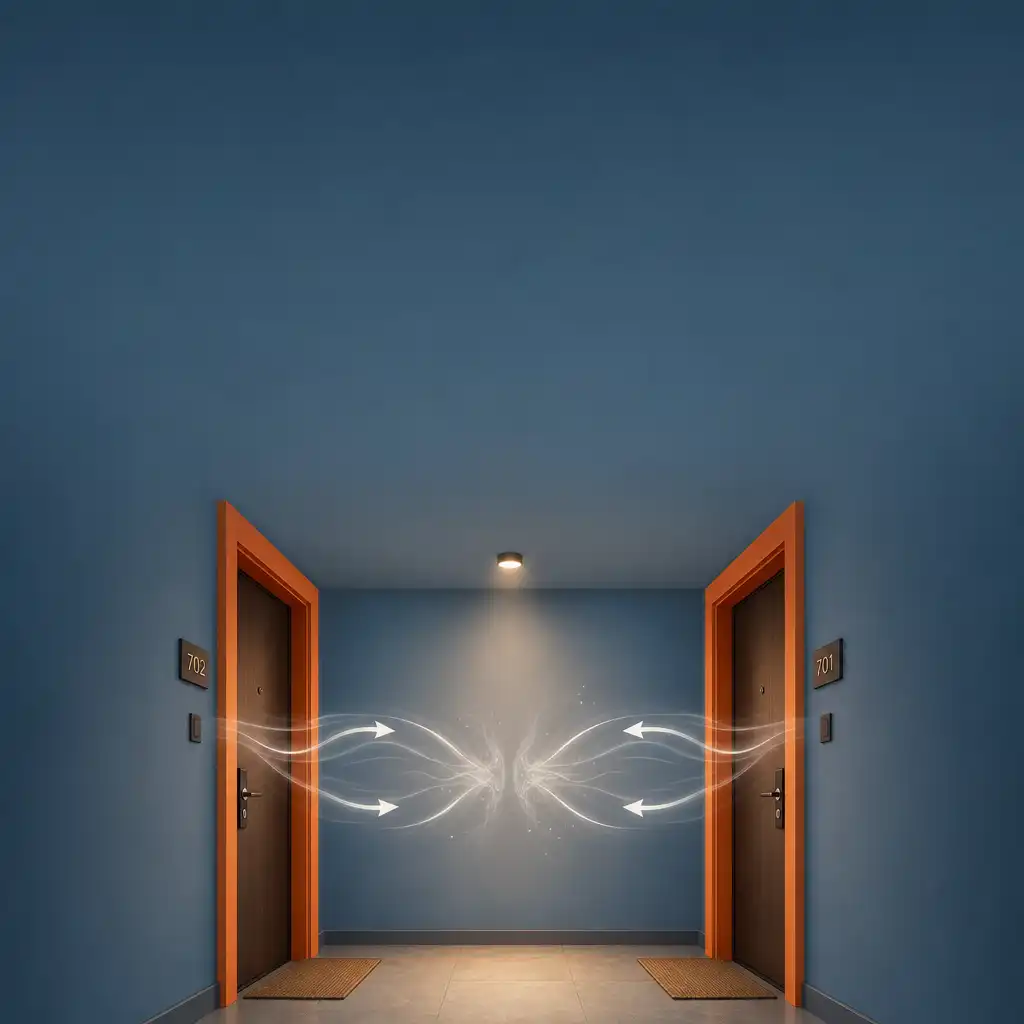
Door facing door feng shui creates a direct collision of energy between two households. The airflow rushes straight back and forth, never settling. Even when both doors are identical, the long-term effect is mutual depletion — like two people constantly competing for the same resources.
How Door Facing Door Creates an Energy Problem
When two doors are directly aligned, three things happen:
1. Energy flows straight through without circulating.
In healthy feng shui, energy should move gently — like a stream winding through a garden, nourishing everything it touches. Door-to-door alignment creates a tunnel effect: energy rushes in and out too fast to settle and support your space.
2. The stronger household tends to "win" the energy exchange.
Over time, the household with better internal setup — cleaner entryway, brighter lighting, more intentional layout — naturally draws more energy. The other side experiences gradual decline: financial instability, career obstacles, family conflicts, or even health issues. It's not malicious; it's just how energy dynamics work.
3. Even equal doors cause long-term drain.
If both households are equally matched, neither wins — but both lose. The constant back-and-forth creates chronic energy waste, like two magnets pushing against each other indefinitely. Both sides feel "off" without knowing why.
This is one of the most common apartment feng shui problems in modern cities. High-rise buildings, shared corridors, and standardized floor plans make door-to-door alignment almost unavoidable. The good news: you don't need to renovate or relocate to fix it.
4 Simple Fixes That Actually Work
You don't need major renovations, expensive consultations, or mystical objects. These four adjustments can be implemented in a single afternoon:
Fix 1: Place a Screen or Console Table at Your Entry
The most reliable and practical solution.
Position a screen, entryway cabinet, or console table just inside your front door. This creates a physical buffer that:
- Slows down rushing airflow
- Redirects energy to circulate within your home instead of shooting straight out the door
- Adds storage (bonus: a tidy entryway improves your home's energy on its own)
What works best: A solid wood screen or cabinet at least waist-high. If your entryway is narrow, a slim console table with a decorative panel works too. Avoid glass or transparent dividers — they don't block energy flow effectively.
This is the #1 recommended remedy in classical feng shui for entrance conflicts. It's mentioned across multiple sources as the most dependable fix for door-to-door situations.
Fix 2: Add a Tall Plant Near Your Entrance
Softens the energy clash while making your space look great.
Position a tall, leafy plant either just outside your door (if your building allows) or inside the entryway. Good options include:
- Money Tree (Pachira aquatica) — a classic feng shui plant associated with prosperity
- Monstera (Monstera deliciosa) — large, soft leaves that calm sharp energy
- Lucky Bamboo — low-maintenance and symbolically positive
Plants serve three purposes: they soften harsh energy collisions, filter and freshen the air, and add living greenery that naturally improves mood. Multiple studies (including research from the University of Exeter) have shown that indoor plants reduce stress and boost concentration.
Avoid: Cacti or any plant with sharp spines at the entrance. These create additional tension rather than resolving it.
Fix 3: Keep Your Door Closed
The simplest habit with the most immediate effect.
Close your front door whenever you're not actively entering or leaving. This:
- Reduces direct airflow collision with the hallway
- Keeps your home's energy contained instead of leaking out
- Protects your family's privacy and reduces noise
Leaving the door open — even just cracked — allows energy to flow freely between households. A closed door creates a boundary that keeps your space protected and your energy focused inward.
Practical tip: If you live in a warm climate and need ventilation, use windows on the opposite side of your apartment instead. Cross-ventilation through side windows maintains fresh air without exposing your entrance to direct collision.
Fix 4: Hang Positive Decor Above Your Door (Optional)
You can hang small decorative items above your door frame to reinforce your own energy. Good options include:
- A small wind chime — gentle sound energy that refreshes stagnant air
- A decorative knot or tassel — visually warm, symbolically positive
- A small potted herb or succulent shelf — adds life and greenery
What to avoid: Convex mirrors (sometimes called "bagua mirrors"). Some practitioners recommend these for door conflicts, but we explicitly advise against them. Pointing a mirror at your neighbor's door can create real-world interpersonal tension. Feng shui should improve your life — not start a conflict with the people living next door.
The Bottom Line: This Is Fixable
Door-to-door alignment is not a disaster. It's a common architectural reality in modern apartment living — and one that has straightforward, low-cost solutions.
The key principle is simple: interrupt the direct line of energy collision, strengthen your own space, and maintain good entrance habits. Do these consistently, and you'll stabilize your home's energy, protect your sense of wellbeing, and create a more harmonious living environment.
You don't need to believe in mystical forces for these adjustments to work. A screen physically slows airflow. Plants improve air quality and reduce stress. A closed door maintains privacy and thermal efficiency. These are practical environmental improvements that benefit you regardless of your belief system.
Want to go deeper? Our guide on 10 Home Feng Shui Hacks That Actually Work covers broader entrance and room-by-room adjustments. And if you're curious about how your personal energy profile affects your ideal home layout, run your free BaZi chart to discover your favorable element — then match your feng shui colors and directions accordingly.
Disclaimer: This article explores Chinese cultural traditions and feng shui as a framework for environmental design and self-reflection. Feng shui is not a scientifically proven causal system. The practices described are shared for cultural understanding and practical space optimization.
Frequently Asked Questions
Is door facing door really bad feng shui?
Yes, in traditional feng shui it's considered one of the most common spatial conflicts. When two doors face each other directly, energy flows straight between them without circulating — creating what practitioners call a 'collision.' The household with stronger internal energy tends to absorb the weaker one's energy over time. This is especially common in modern apartment buildings.
What if both doors are the same size?
Even if both doors are identical, a long-term energy drain still occurs. Think of it like two fans blowing against each other — neither wins, but both waste energy. Over months, both households may experience subtle effects: financial instability, career setbacks, or increased household tension.
Can a screen or plant really fix the energy clash?
A solid screen or tall plant near the entrance is the most widely recommended remedy in classical feng shui for door-facing-door situations. The screen physically redirects rushing airflow so energy circulates inside your home instead of shooting straight out. A plant softens the collision and adds living greenery that improves air quality. Both are low-cost, practical solutions — no special feng shui items required.
Should I use a bagua mirror to block the energy from my neighbor's door?
We advise against bagua mirrors for this situation. While some practitioners recommend them, pointing a mirror at your neighbor's door can escalate real-world tension — and feng shui should improve your life, not create conflict with the people living next door. Stick with screens, plants, and door habits instead.