BaZi Astrology
Mental Clarity in the AI Age: What TCM and Bazi Teach
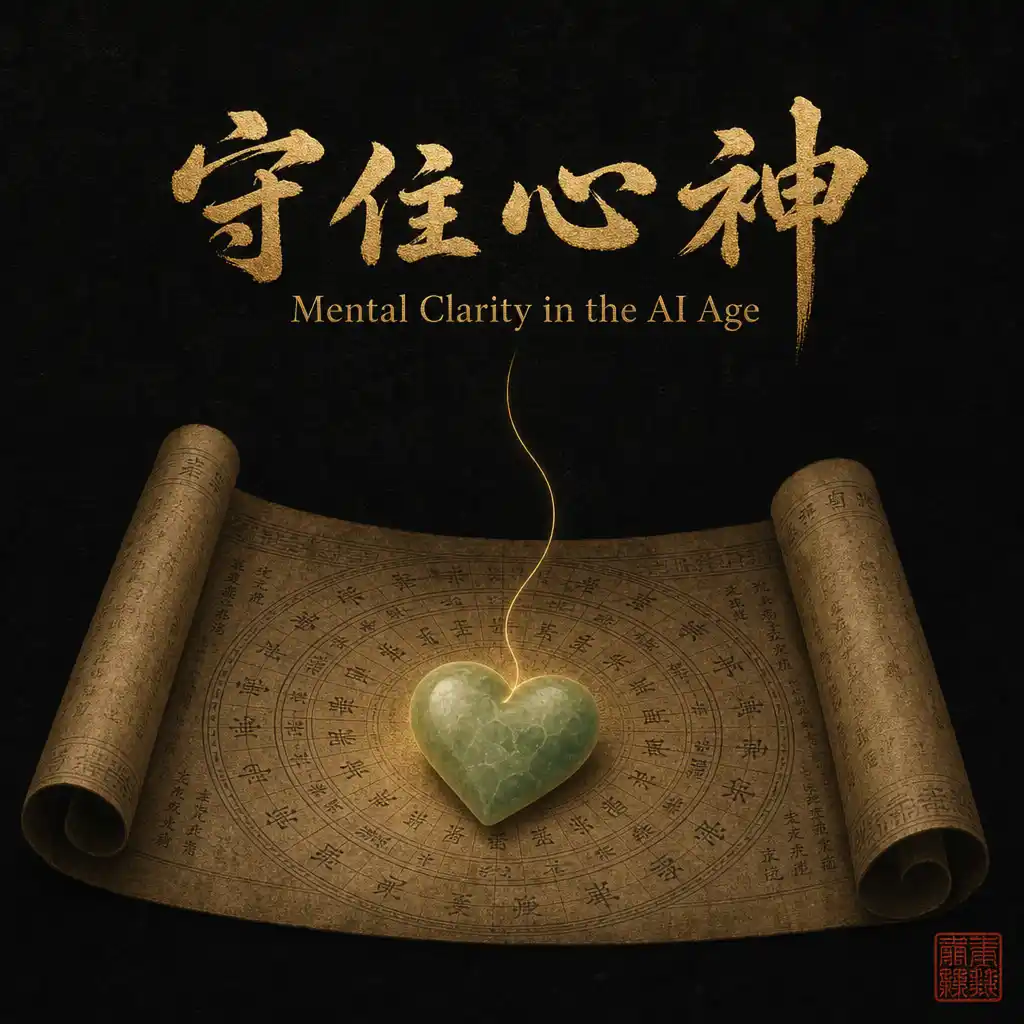
Can You Protect Your Mind in the Age of AI?
Mental clarity is the first thing artificial intelligence takes from you—and traditional Chinese medicine (TCM) and Bazi metaphysics explain not only why, but exactly how to get it back.
I read a lot of writing from students and clients. After a while you can tell in two sentences whether a piece came from a real person or an AI. The machine versions are flawless: no typos, tidy logic, smooth sentences. And that very perfection gives them away. They are missing the small, messy, living details—the exact smell of a factory floor, the offhand remark someone made at the end of a conversation—that only a body present in the moment could catch.
This essay is about that gap, and what 2,000 years of Chinese medicine and destiny study add to it.


Article Summary
AI makes writing look easy and thinking look optional. But clarity of mind is a physical resource, not a software feature. TCM locates it in the Heart spirit (Shen); Bazi locates it in your "useful god" (the capacity you must build yourself). Short videos and lazy prompts scatter both. The fix is old: guard your attention, calm the spirit, and let tools extend you instead of replacing you.
Direct Answer: Is AI Stealing Your Independent Thinking?
Yes—but only if you hand it your thinking. The cure is not quitting AI; it is keeping ownership of your judgment. Traditional Chinese medicine and Bazi agree on one point: a clear mind is something you cultivate, not something a tool lends you.
In TCM, focus and insight are expressions of Shen (神, spirit), housed in the Heart and fed by blood and quiet. When the spirit is scattered by constant notifications, the mind fogs—not because you are lazy, but because your inner terrain no longer supports deep thought. Bazi makes the same point through the yong shen (用神, useful god): the element in your chart that empowers you. You have to develop that capacity yourself. A tool can sharpen it; it cannot be it. Outsource your thinking to a chatbot and, like a muscle you stop using, the faculty atrophies.
So the real question is not "AI: good or bad?" It is "who owns the question?" Keep the question, and the tool serves you. Hand it over, and you become the tool's appendage.
Core Concepts: TCM Focus and the Bazi "Useful God"
The Heart Houses the Spirit
Chinese medicine is blunt about this. The Huangdi Neijing (Yellow Emperor's Inner Canon) states it plainly:
"心者,君主之官也,神明出焉。" "The Heart is the sovereign organ; from it the spirit (Shen) emerges."
Shen is not "soul" in a religious sense. It is your capacity for clear awareness—attention, discernment, the calm that lets one thought follow another instead of fifteen at once. When Shen is settled, you think straight. When it is yanked in twenty directions by pings and feeds, you don't have a "focus problem." You have a scattered-spirit problem.
This is why the summer chapter of the Neijing insists on emotional restraint:
"夏三月,此谓蕃秀…使志无怒,使气得泄。" "In the three months of summer…let your intention be free of anger, let the qi flow and release."
Summer (and its lingering late-summer heat) rules the Heart in the five-element cycle. Push the Heart with heat, anger, and overstimulation and the spirit cooks. Calm it, and clarity returns. If you want the element behind this, our five elements guide lays out why fire connects to the Heart and to attention itself.
The "Useful God" Is Yours
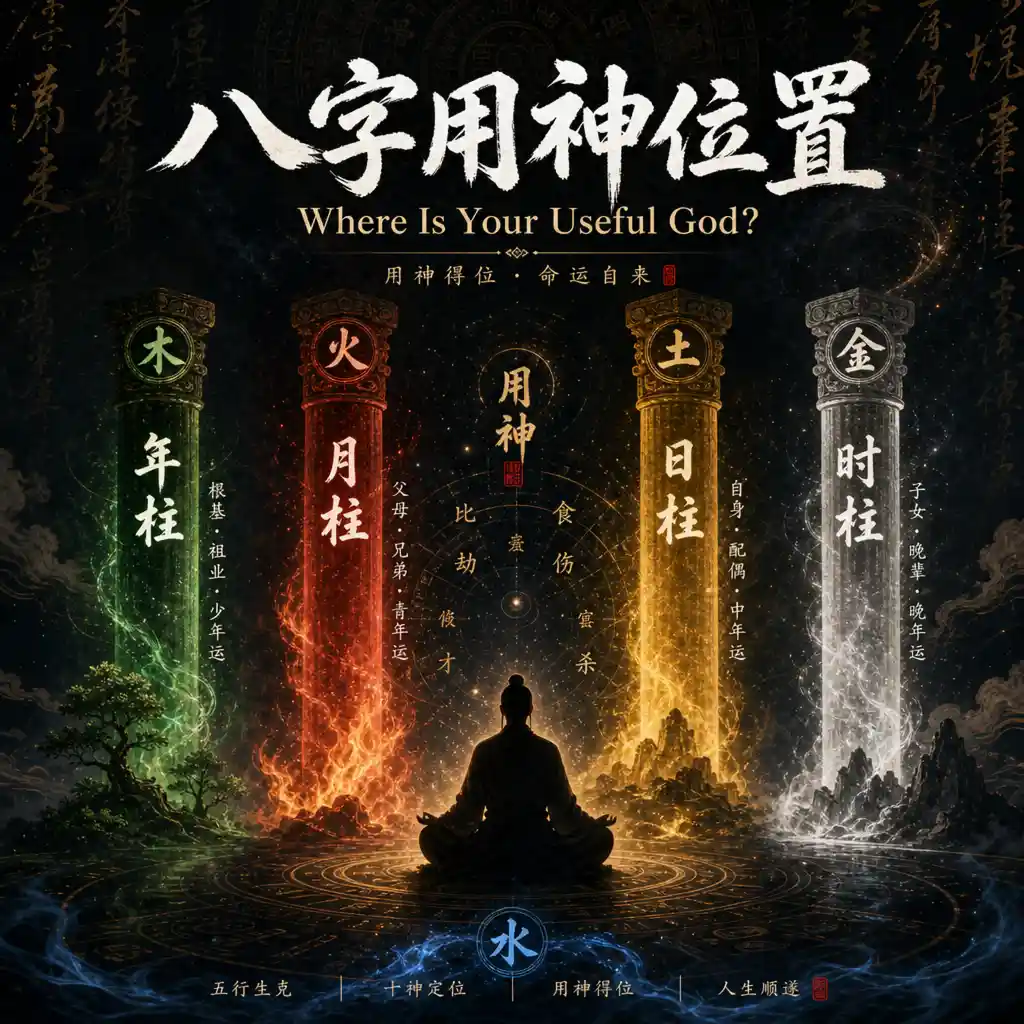
Bazi (Four Pillars) reads your destiny from the hour, day, month, and year of birth. At the center of every chart sits the yong shen—the useful god, the element that balances and empowers the whole configuration. A skilled reading strengthens your useful god; a weak one leaves you adrift.
Here is the metaphor that matters for our age: your useful god is the part of you that thinks, decides, and owns outcomes. No app can be your useful god. If you let a chatbot make your calls, draft your apologies, and choose your words, you are asking a tool to play the one role only you can hold. The chart still works—but you stopped reading it.
This is the exact trap we documented in why AI gets Bazi wrong: AI can calculate your chart in a second and still miss the living judgment a human brings. The same is true in reverse—hand AI your decisions and it calculates fast while your own judgment goes soft.
Fragmentation Scatters the Spirit
The Neijing also warns, in plain bodily terms:
"久视伤血,久卧伤气,久坐伤肉。" "Prolonged staring damages the blood; prolonged lying damages the qi; prolonged sitting damages the flesh."
"Prolonged staring" in 2026 means the phone. The eyes are the widest opening through which energy leaks outward; the algorithm is built to keep them there. The physician Zhu Danxi, writing in the Yuan dynasty, described a "ministerial fire" (相火) that should stay banked low. When it flares—through overstimulation, craving, and restless scrolling—it burns through the essence that should nourish the spirit. The modern result has a name in clinics: upper heat, lower cold. Wired at night, cold and foggy by day, unable to drop into any real work.
Taoism frames the same drift with an image every Chinese speaker knows:
"心猿意马" — "the monkey of the mind and the horse of intent."
The monkey leaps branch to branch; the horse runs with no rider. Without a way to tether the monkey and rein the horse, your energy scatters to the wind. Mental clarity, in this view, is not something you force into existence. It is your original nature, uncovered once the body and breath stop thrashing.
Practical Guide: Reclaiming Focus and Finding Flow State
1. Use AI, but never hand it the question
I am not anti-AI. I use it daily to draft, summarize, and check my own reasoning. The line is simple and worth saying out loud: a tool extends your perception and your questions; it must never receive your thinking. The person who owns the question stays in charge. The person who pastes a prompt and ships the output trains themselves to need the prompt.
A young founder I know puts it better than any manual: he asks, before opening any app, "Do I need this, or does it need me?" That one question hands the steering wheel back.
2. Protect the Heart hour and the eyes
The body keeps time. Around 11 a.m.–1 p.m. the Heart meridian peaks; midday is when a short walk or a real meal steadies the spirit far better than a feed scroll. And the "prolonged staring" rule is not optional—give the eyes a hard stop. Set a single no-screen block each day, even thirty minutes, and read something slow. Paper, not pixels.
One of my students, Lin Qingyue, keeps study-trip notes by hand—every stall in Yiwu, every canal in Suzhou, the exact temperature of a negotiation room. Most people who were there forget those details within a week. She remembers because she was there, not because a tool captured it for her. That is the kind of memory no transcript reproduces.
3. Let one task absorb you (the flow state)
Flow is not a productivity hack; it is what happens when the monkey and the horse finally settle. Elon Musk—a Yang Wood day master, as we broke down in his Bazi decode—is often cited for exactly this: the ability to drop into five minutes of concentrated thought that outperform most people's two hours of busywork. The mechanism is ordinary. Single task. Kill the secondary screen. Let the breath slow until the spirit comes home.
Another student, Chen Yanqiu, once joined a factory tour and later recalled, offhand, that the plant could produce 13N-grade copper stock—a detail mentioned once, at the very end of a conversation, that only someone actually listening would catch. That is what a quiet, present mind collects for free. A distracted one walks past it.
4. Calm the spirit, and the body follows
Here is the part people resist: clarity of mind and health of body are one system. The Neijing says it in four lines everyone should memorize:
"恬淡虚无,真气从之,精神内守,病安从来。" "When the mind is calm and uncluttered, true qi follows its course; the spirit is guarded within—how could illness arise?"
Think of the body like a wok. Outside, summer heat presses in; inside, if the spirit is anxious, cold and damp pool and cannot vent. Heat cannot enter, turbid qi cannot leave, and the whole system slowly "rusts." A student of mine, Su Nian'an, drinks almost nothing socially and used to flush after a single cup; as her mood and sleep steadied, her tolerance rose without her trying. The state of the spirit genuinely moves the body. Guard the attention, and the body stops fighting itself.
5. Know your own useful god
The most concrete step: find out what actually empowers your chart. Run your free Bazi chart calculator, see where your useful god sits, and treat it as a personal instruction—not a fortune, but a description of the condition under which you think best. Some charts need movement, some need stillness, some need fire, some need water. Match the environment to the chart and the mind stops fighting the terrain.
FAQ
Can Chinese medicine actually improve focus? Yes. TCM treats focus as balanced Shen fed by blood and quiet. Protecting the Heart hour, cutting screen time, and calming the mind through qigong or slow reading all reduce the fog that fragmented information creates.
What does Bazi say about independent thinking? Bazi centers on the yong shen, the element that empowers your chart. The lesson is direct: build your own capacity to think before any tool helps. Outsource judgment to AI and that capacity atrophies like an unused muscle.
Why does short-video scrolling drain my energy? In TCM terms it over-stimulates the eyes and mind, flares the ministerial fire, and scatters the Heart spirit—producing the "upper heat, lower cold" pattern: wired but tired, unable to settle into deep work.
How do I enter a flow state according to Chinese wisdom? Taoism calls the restless mind "the monkey of the mind and the horse of intent." Flow comes when you still the body and breath so the spirit returns home. Single-task, protect a no-screen block, and let one task absorb you.
Is using AI wrong? No. It is a fine assistant for tedious work. The line: use it to extend your perception and questions, never to hand over your thinking. Whoever owns the question stays in charge.
The Takeaway
Tools serve people. People are not meant to serve the algorithm or the AI. The clarity you lose to a chatbot or a feed is not gone forever—it is a muscle, and muscles recover the moment you use them again. Guard your attention, calm the spirit, know your useful god, and let the machine be the helper it was built to be.
Want to see what actually empowers your chart? Run your free Bazi reading and start from there.
Frequently Asked Questions
Can Chinese medicine actually improve focus?
Yes. TCM sees focus as an expression of balanced Shen (spirit) and nourished blood. Practices like protecting the Heart hour, limiting screen time, and calming the mind (via qigong or quiet reading) reduce the mental fog that fragmented information creates.
What does Bazi say about independent thinking?
Bazi centers on the 'useful god' (yong shen)—the element that empowers your chart. The metaphor is direct: you must develop your own capacity to think before any tool can help. Outsourcing judgment to AI lets your 'useful god' atrophy.
Why does short-video scrolling drain my energy?
In TCM terms, endless scrolling over-stimulates the eyes and mind, disturbs the ministerial fire, and scatters the Heart spirit. The result is the 'upper heat, lower cold' pattern—wired but tired, unable to settle into deep work.
How do I enter a flow state according to Chinese wisdom?
Taoism calls the restless mind 'the monkey of the mind and the horse of intent.' Flow arrives when you still the body and breath so the spirit returns home. Single-task, protect a no-screen block, and let one task absorb you completely.
Is using AI wrong?
No. AI is a fine assistant for tedious work. The line is simple: use it to extend your perception and questions, never to hand over your thinking. The person who owns the question stays in charge; the person who outsources it loses the skill.